Multimodal AI Explained: What It Means for Bloggers and Content Creators in 2026
Multimodal AI goes beyond text. It processes images, audio, video and documents together. Here is a clear breakdown of what it means for bloggers and content creators in 2026.
Most conversations about AI still revolve around text. You type something, AI responds with text. That is the mental model most bloggers are working with right now.
It is already outdated.
The more accurate picture of where AI actually sits in 2026 is multimodal, meaning AI systems that process and generate across multiple input and output types simultaneously: text, images, audio, video, documents, and code, handled within a single model rather than separate tools stitched together.
This post breaks down what multimodal AI actually is, where it currently stands, and what the practical implications are for bloggers and content creators specifically.
What Multimodal AI Actually Means?
The term sounds technical but the concept is straightforward.
A standard language model takes text in and produces text out. A multimodal model takes multiple input types (text, image, audio, video, documents) and can produce multiple output types depending on what the task requires.
Practical example: you upload a photo of a hand-written notes page, a recorded voice memo explaining the context, and a rough outline document. A multimodal AI processes all three simultaneously and produces a structured, formatted blog post draft based on the combined input.
That is not a future scenario. That capability exists in current models right now.
Where the Major Models Currently Stand
A quick structured comparison of where the leading multimodal models sit in 2026:
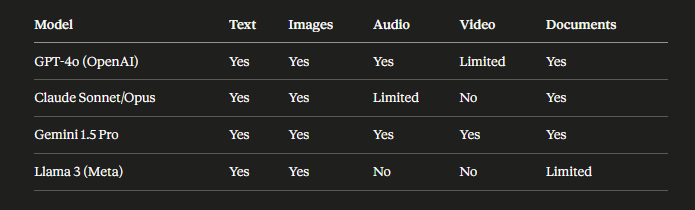
Gemini currently leads on raw modality coverage, particularly video understanding. Claude leads on document analysis and long context handling. GPT-4o sits in the middle with strong audio capabilities added to solid text and image processing.
The gap between these models on multimodal tasks is narrowing faster than the gap on text-only tasks. Within 12 months, full audio and video input handling will likely be standard across all major models, not a differentiating feature.
What This Changes for Bloggers Specifically
This is where the numbers matter more than the technical description.
Research workflows change first. Instead of reading through a 60-page PDF report and manually pulling relevant statistics, you upload the document and ask the model specific questions. Instead of transcribing a podcast interview manually, you feed the audio directly and extract quotes. Time saved per research task: measurable and significant depending on source volume.
Content repurposing becomes faster. A single blog post can currently be converted into multiple formats manually or with multiple tools. Multimodal AI compresses this. You provide the blog post plus your brand color reference image plus a voice note explaining the tone you want, and the model handles the reformatting instructions across formats simultaneously.
Image analysis for SEO becomes accessible. You can upload competitor blog screenshots and ask the model to identify content structure patterns, heading hierarchy, and visual layout decisions without manually reverse-engineering what you see. This is a competitive research capability that previously required significant time investment.
Content auditing scales. Upload multiple existing blog posts simultaneously and ask the model to identify inconsistencies in tone, gaps in topic coverage, or duplicate content angles across your archive. This is a content strategy task that previously required either expensive tools or manual review.
The Limitation Worth Tracking
Multimodal capability does not mean multimodal accuracy is uniform across all input types.
Current models handle text most reliably. Image understanding is strong but context-dependent. Audio transcription accuracy drops with accents, background noise, or overlapping speakers. Video understanding is early stage and works best on clearly structured content rather than complex, fast-moving footage.
The practical implication: weight your trust in multimodal outputs based on input type. Text and document outputs are ready for professional use with standard review. Audio and video outputs still require more careful verification before using in published content.
Summary Assessment
Multimodal AI is not a future trend to monitor. It is a current capability that most bloggers are underusing because the mental model of AI as a text tool has not caught up with what the tools can actually do today.
The bloggers who adjust their workflows to treat AI as a multimodal input processor rather than a text generator will compress production timelines in ways that single-modality users cannot match using the same tools.
The adjustment required is not technical. It is simply updating the habit of always starting with typed text input, and replacing it occasionally with the input type that is actually most natural for the task at hand.
Tags: Multimodal AI, AI for Bloggers, GPT-4o, Gemini AI, Claude AI, AI Content Workflow, AI Image Analysis, AI Audio Processing, Content Creation 2026, AI Tools Comparison, AI Forum, AI Webloggers