The debate around AI-generated content is heating up in Europe.
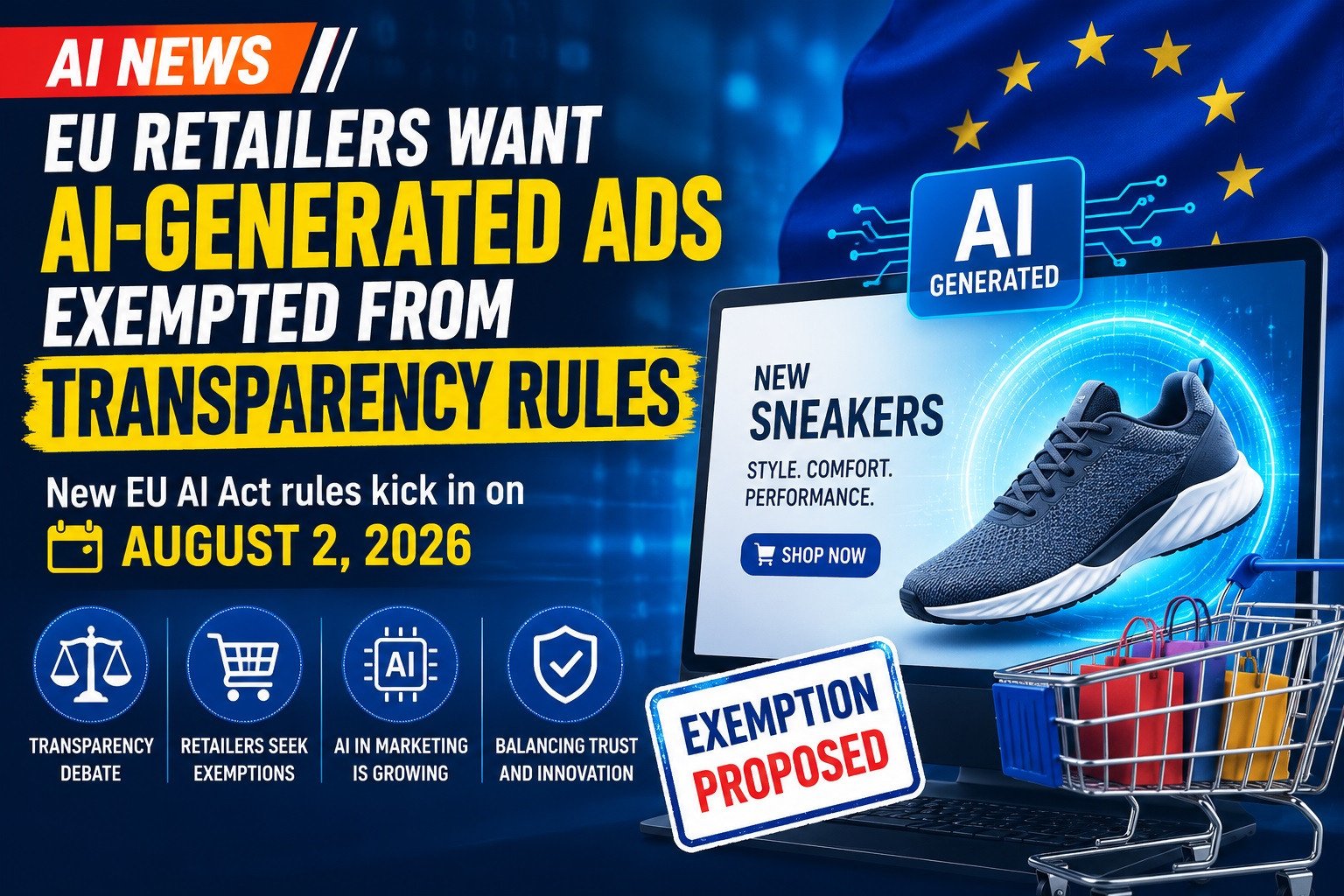
A major European retail association, Eurocommerce, is asking the European Union to exempt AI-generated advertisements from upcoming transparency requirements under the EU AI Act. The new rules are scheduled to take effect on August 2, 2026.
The concern is simple.
Retailers argue that not every AI-generated advertisement should be treated like a "deepfake."
For example:
- Creating an AI-generated living room to showcase a sofa
- Improving product images with AI
- Enhancing marketing visuals for online stores
According to the association, these uses are not intended to deceive consumers and therefore shouldn't require mandatory labels.
Some major brands represented by the group include companies such as Amazon, H&M, Ikea, and Inditex (Zara's parent company).
What's interesting is that many retailers are already heavily dependent on AI.
German fashion retailer Zalando previously said AI helped reduce content production costs by around 90%, while brands like H&M and Zara have experimented with AI-generated model clones for marketing campaigns.
However, this raises an important question.
Should consumers always know when AI was used to create an advertisement?
Supporters of exemptions say that if every AI-assisted image gets a label, the warning itself may lose its meaning because almost all online marketing content will eventually become AI-assisted.
On the other hand, critics argue that transparency builds trust and helps consumers understand what is real and what has been artificially created.
As bloggers and content creators, this discussion matters because similar transparency rules could eventually expand beyond advertisements.
In the future, creators may need to disclose AI usage for:
- Blog illustrations
- Marketing banners
- AI-generated videos
- Product images
- Social media campaigns
Personally, I think we're entering an era where "AI-assisted" will become normal rather than exceptional.
The challenge will be finding the balance between transparency and overwhelming users with labels everywhere.
What do you think?
Should AI-generated advertisements always be labeled, or should ordinary marketing images be exempt from disclosure rules?
Keyword Tags:
EU AI Act, AI News, AI Advertising, AI Generated Ads, AI Transparency, AI Regulation, Digital Marketing, AI Blogging, Content Creation, Retail Industry, AI Ethics, Marketing Trends, AI Policy, Generative AI, Blogging News