Backlinks have been a part of SEO conversations for as long as I can remember, but the way they actually work has changed a lot. With AI Overviews picking and choosing which sources to trust, and Google getting better at spotting spammy link patterns, the old "get as many links as possible" approach just doesn't cut it anymore.
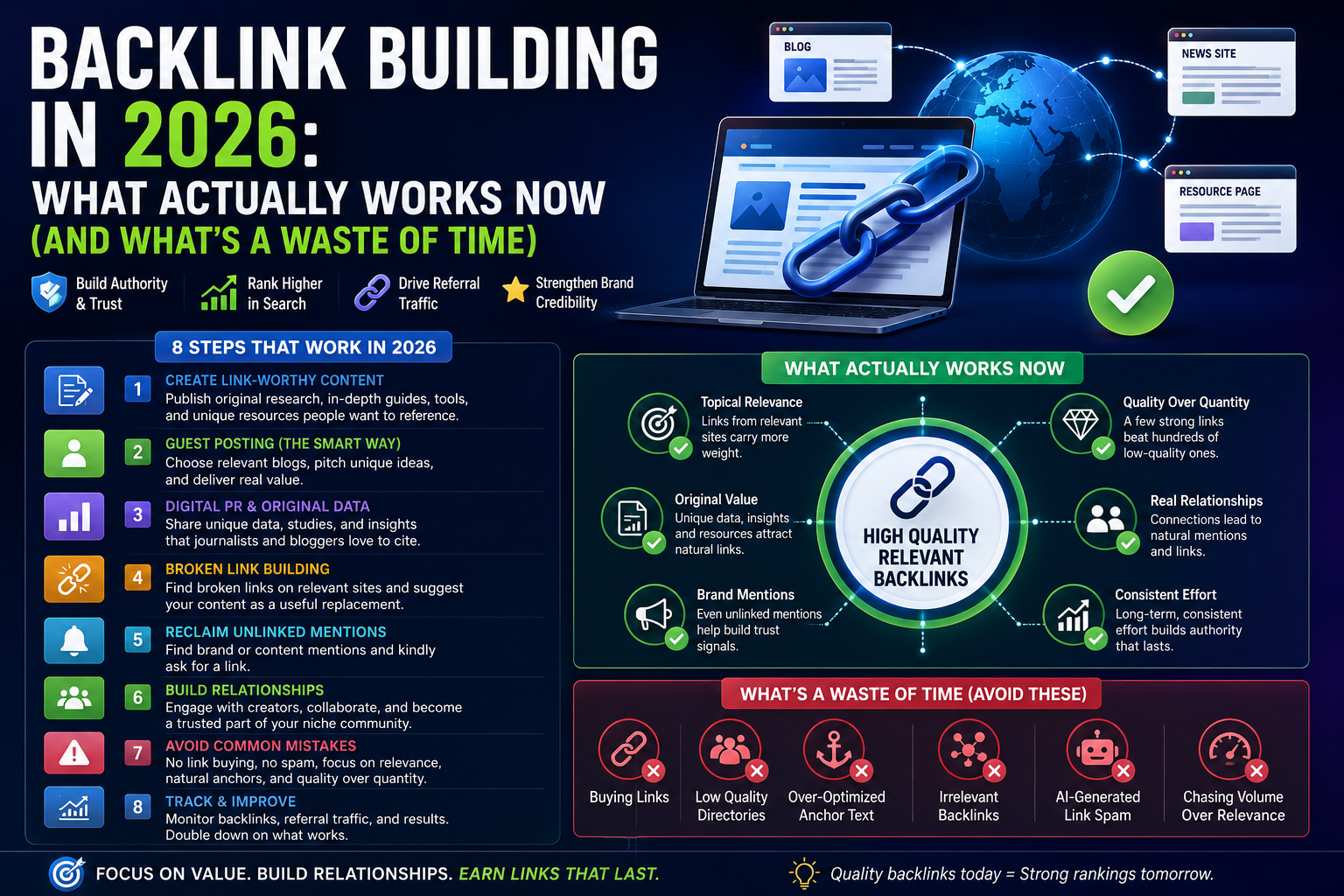
I wanted to put together a practical guide on backlink building in 2026, based on what's actually working for bloggers right now, not outdated tactics that quietly stopped working years ago.
Why Backlinks Still Matter in 2026?
Some people assume backlinks are becoming less important because of AI search results. Honestly, the opposite is closer to the truth.
Google's AI Overviews tend to pull information from domains with strong authority and trust signals, and backlinks remain one of the clearest signals of that trust. If two articles say the same thing, the one backed by credible links is more likely to get cited, ranked higher, or both.
So backlinks aren't dying. They're just becoming more about quality and relevance than sheer quantity.
What Changed Compared to a Few Years Ago?
A few shifts worth understanding before you start building links:
- Quality over quantity is no longer optional. A handful of links from respected, relevant sites beats hundreds of low-quality directory links.
- Topical relevance matters more. A link from a site in your niche carries more weight than a random high-authority site that has nothing to do with your topic.
- AI-generated link spam is easier to detect. Search engines have gotten much better at spotting unnatural patterns, like sudden spikes of similar-looking links.
- Brand mentions without links are starting to count too. Even unlinked mentions of your brand or content can contribute to how trustworthy you appear.
Step 1: Create Content Worth Linking To
This sounds obvious, but it's still the foundation everything else builds on.
Before chasing links, ask yourself: would someone genuinely want to link to this? Content that naturally attracts backlinks usually falls into a few categories:
- Original research or data (surveys, case studies, statistics you collected yourself)
- Comprehensive guides that cover a topic better than anything else available
- Free tools, templates, or calculators
- Strong opinion pieces that spark discussion
- Visual content like infographics or comparison charts
If your content doesn't give people a reason to reference it, even the best outreach email won't help much.
Step 2: Guest Posting (Still Works, But Smarter)
Guest posting hasn't disappeared, but the approach needs to be more thoughtful now.
Instead of mass-emailing fifty random blogs asking to publish "a guest post," try this:
- Pick blogs that are genuinely relevant to your niche, not just ones with high traffic numbers.
- Read a few of their existing posts before pitching, so your email doesn't sound copy-pasted.
- Offer a specific topic idea instead of a vague "can I write for you" message.
- Make sure your contributed post is genuinely useful, not just a thin piece built around squeezing in a link.
Quality guest posts on relevant blogs still build real authority and often bring direct referral traffic too, not just SEO value.
Step 3: Digital PR and Original Data
This is probably the biggest opportunity for bloggers willing to put in extra effort.
Journalists and other bloggers are constantly looking for data points, quotes, or unique angles for their articles. If you can position yourself as a source, you can earn backlinks from sites you'd never get through cold outreach alone.
A few ways to do this:
- Run a small survey related to your niche and publish the results.
- Create an original study using data you already have access to (analytics, customer data, social trends).
- Respond to journalist requests on platforms designed for source-finding.
- Pitch your unique data or opinion directly to relevant publications.
Even a small, well-presented study can earn multiple backlinks if it offers something nobody else has published yet.
Step 4: Broken Link Building
This tactic is older, but it still works well because it solves a real problem for the other website.
Here's the simple process:
- Find relevant blogs or resource pages in your niche.
- Look for broken or outdated links (there are free tools that scan for this).
- Reach out to the site owner, point out the broken link, and suggest your content as a replacement.
- Make sure your content actually fits well as a replacement, not just a random link.
Most site owners appreciate being told about broken links, which makes this a relatively easy way to start a conversation.
Step 5: Reclaim Unlinked Mentions
Sometimes other websites mention your brand, your blog name, or even quote your content without linking back to you.
Set up simple alerts for your brand name or blog title, and whenever you spot an unlinked mention, send a polite email asking if they'd be willing to add a link. Many site owners are happy to do this since it's a small, easy favor.
This is one of the most underused link-building tactics simply because most bloggers never bother checking for these mentions in the first place.
Step 6: Build Relationships, Not Just Links
This might be the most important shift in mindset for 2026.
Instead of treating link building as a transaction, treat it as relationship building. Comment genuinely on other blogs in your niche, share other creators' content, collaborate on projects, or simply engage with people in communities like this one.
Over time, these relationships naturally lead to backlinks, because people prefer linking to creators they actually know and trust, rather than strangers who only show up in their inbox asking for a favor.
Step 7: Avoid These Common Mistakes
A few mistakes I still see bloggers make when building backlinks:
- Buying links in bulk. This is risky and can hurt your site if detected.
- Focusing only on Domain Authority scores. A relevant link from a smaller site is often more valuable than an irrelevant link from a huge one.
- Ignoring anchor text diversity. Using the exact same anchor text repeatedly looks unnatural.
- Chasing volume instead of relevance. Ten relevant, quality links usually outperform a hundred random ones.
- Forgetting internal links. While not technically "backlinks," strong internal linking still supports your overall site authority and helps both readers and search engines navigate your content.
Step 8: Track What's Actually Working
Don't just build links and forget about them. Periodically check:
- Which backlinks are sending you real referral traffic
- Whether new backlinks are appearing naturally from people referencing your work
- If any old, spammy backlinks need to be disavowed
A simple monthly check-in helps you understand which strategies are actually worth repeating and which ones are wasting your time.
A Realistic Workflow for 2026
Here's a simple workflow that combines everything above:
Create genuinely valuable content
↓
Identify relevant blogs and publications in your niche
↓
Reach out for guest posts or collaborations
↓
Build or publish original data when possible
↓
Monitor and reclaim unlinked brand mentions
↓
Fix broken links pointing to outdated resources
↓
Track results monthly and adjust strategy
This isn't a one-time task. It's an ongoing process that compounds over months and years.
Final Thoughts
Backlink building in 2026 isn't about gaming the system anymore. It's about creating content people genuinely want to reference, building real relationships in your niche, and being patient enough to let authority build naturally over time.
The bloggers who succeed with this aren't necessarily the ones sending the most outreach emails. They're the ones creating something worth linking to in the first place.
Tags: Backlink Building, SEO 2026, Link Building Strategy, Digital PR, Guest Posting, Domain Authority, Off Page SEO, Content Marketing, Organic Traffic, Blogging SEO